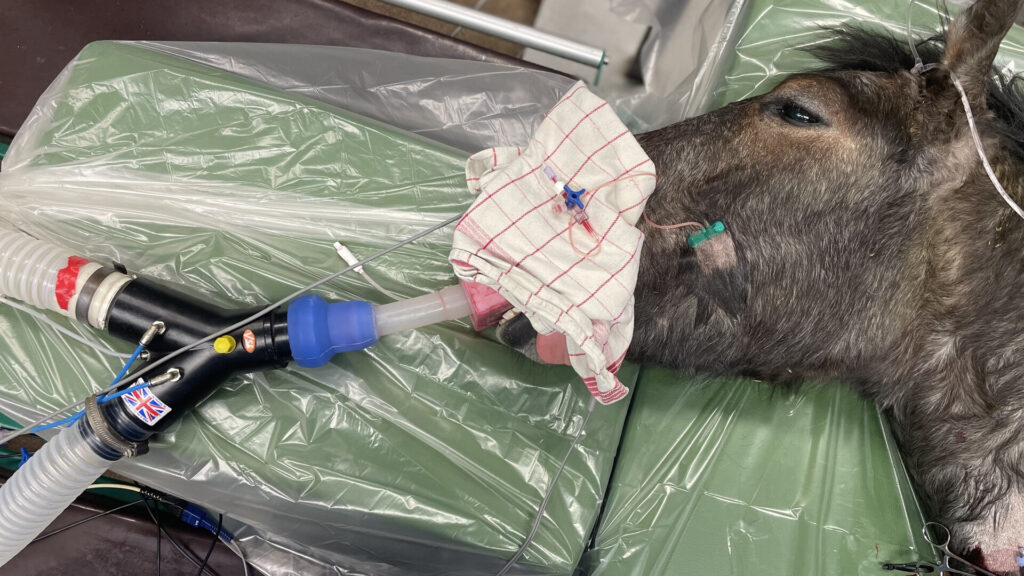
Practical Equine Anesthesia

Advanced Practical Anesthesia for Equine Clinics

What is the OVT Equine Anesthesia Training Program?

The Equine Anesthesia Training Program is a comprehensive, practice-oriented training designed specifically for equine referral hospitals and clinics that are fully equipped to perform general anesthesia in horses.

This program is ideal for:

  • Interns working in equine hospitals
  • Young clinicians starting in surgical or anesthesia rotations
  • Equine practitioners who regularly anesthetize horses in a clinical setting
  • Clinics seeking structured in-house anesthesia training

Important: The entire training program is conducted in English.
All theoretical modules, quizzes, materials, and practical instruction are delivered exclusively in English.

This program is primarily designed for equine clinics that are equipped to perform general anesthesia in horses. Participants will benefit most if they work in a setting with access to anesthesia machines, monitoring equipment, and appropriate clinical infrastructure. However, the theoretical component can also provide valuable knowledge for practitioners who wish to deepen their understanding of equine anesthesia principles, even if they are not routinely performing full general anesthesia.

The training consists of two parts:

  1. Theoretical component
  • 8 structured modules
  • Total of 12 hours of online education
  • Delivered as self-paced, standalone webinars
  • Includes intermediate quizzes for knowledge consolidation
  • Participants may start at any time from June 1, 2026 onward
  • Each participant has 4 months to complete the full theoretical component from their individual start date

The theory provides a structured and clinically applicable foundation in equine anesthesia principles, risk management, monitoring, pain management, and complication handling.

  1. On-site practical training

Participants may choose to add a three-hour hands-on practical session to the theoretical program. This optional practical component is conducted in the participant’s own equine clinic.

  • 3-hour hands-on session
  • Conducted in the participant’s own equine clinic
  • Maximum 4 participants per session
  • One-on-one guidance by an experienced equine anesthesiologist
  • Training performed using the clinic’s own anesthesia machine and monitoring equipment

This format ensures:

  • Direct application to daily workflow
  • Optimization of the clinic’s own equipment setup
  • Practical refinement of induction, maintenance, monitoring, and recovery protocols
  • Immediate feedback and individualized coaching

The practical session is scheduled individually in consultation with the lecturer, depending on the availability of the clinic and instructor.

This program is intended for veterinarians working in equine clinics where general anesthesia in horses is routinely performed. It is particularly suitable for interns and early-career clinicians who want to build and strengthen their knowledge and practical skills in equine anesthesia in a structured way.

Participants benefit most when they have access to an anesthesia machine, monitoring equipment, and the clinical infrastructure required to safely perform general anesthesia in horses.

However, the theoretical component can also provide valuable knowledge for practitioners who wish to deepen their understanding of equine anesthesia principles, even if they are not routinely performing full general anesthesia.

The program consists of eight structured online modules, representing a total of 12 hours of theoretical education. The learning format is fully self-paced and includes integrated quizzes to reinforce knowledge throughout the course. Participants can start at any time from June 1, 2026, and will have four months from their individual start date to complete the theoretical component.

In addition to the online training, participants have the option to enroll in a three-hour on-site practical session held in their own equine clinic. This practical component is optional and can be added to the theoretical program. When selected, the practical training takes place in small groups of a maximum of four participants and is guided by an experienced equine anesthesiologist. The session is conducted using the clinic’s own anesthesia machine and monitoring equipment, ensuring direct applicability to daily clinical practice and facilitating the immediate translation of theory into real-world anesthesia management.

The full program is in English. The teachers however also speak Dutch, so it is possible to do the practical training in Dutch.

This program is accredited by the Order of Veterinarians for 15 continuing education credits. Beyond formal accreditation, the strength of this trajectory lies in its structured combination of in-depth theoretical training and hands-on practical application within your own clinic. By the end of the program, participants will possess a solid and comprehensive understanding of equine anesthesia, including risk assessment, protocol selection, monitoring, complication management, and recovery strategies. The goal is not only to increase knowledge, but to build confidence and clinical decision-making skills in everyday anesthetic practice.

The theoretical component of the program becomes available from June 1, 2026. Participants may begin at any time from this date onward, as the online modules are completed independently. From their individual start date, participants have four months to complete the full theoretical component.

The practical on-site training is scheduled individually in consultation with the lecturer and depends on the availability of the participant, the clinic, and the instructor.

Fundamental principles of equine anesthesia and anesthesia machine use

This module covers the core physiological principles of equine anesthesia and provides a detailed overview of anesthesia machines and equipment selection.

Topics include:

  • Components and functioning of the anesthesia machine
  • Equipment setup and material choice
  • Anesthetic risk in horses
  • Main causes of increased anesthetic risk
  • Cardiovascular and respiratory challenges
  • Strategies to reduce anesthetic risk, including adequate sedation, multimodal analgesia, PIVA versus inhalational anesthesia, optimal monitoring, and ventilation options
Lesgevers: Stijn Schauvliege
Totale geschatte tijdsduur: Min 3 hours
Gebruikte leermaterialen: Webinar, Quiz

Wat zeggen onze studenten?

Overtuigd? Schrijf je nu in!

Are you convinced? Enroll now!